
Slab Leak Warning Signs (And What to Do Before It Gets Expensive)
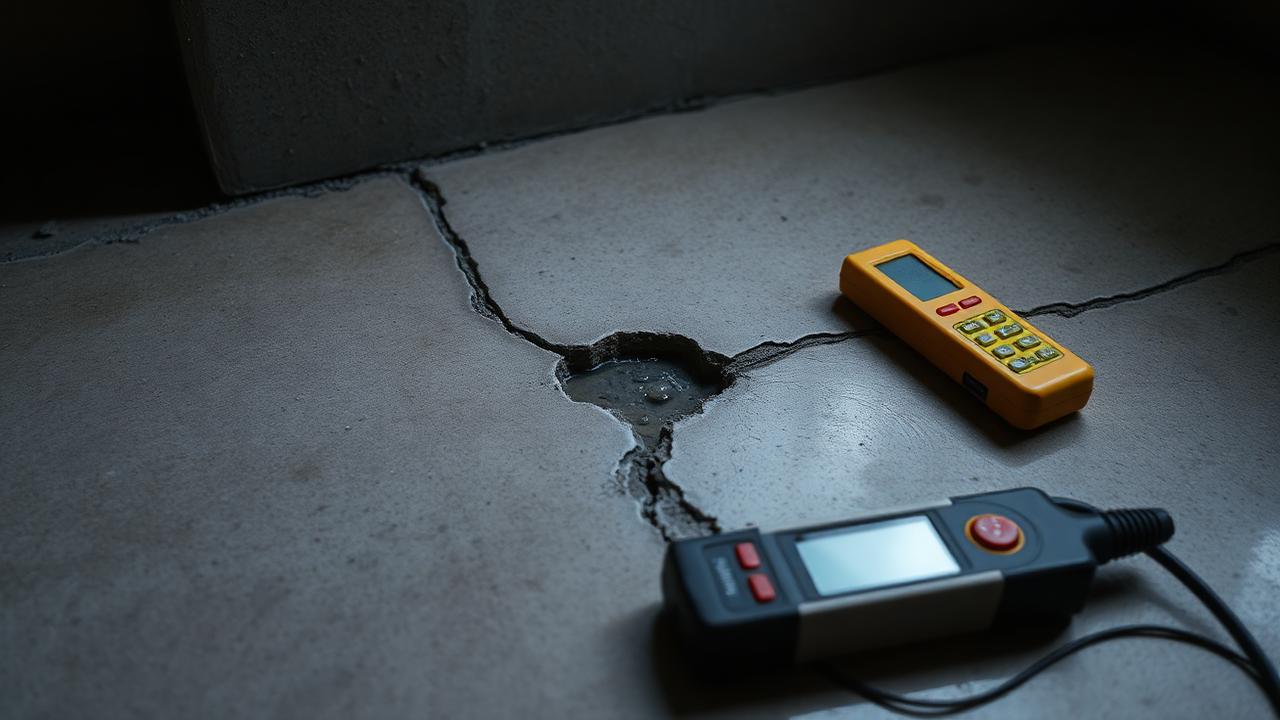
A slab leak is a leak in a water supply line beneath your home's concrete foundation. They're sneaky — by the time you see visible damage, the leak has often been running for months. Here's what to watch for.
7 Warning Signs
- Unexplained spike in water bill — the single most reliable early indicator.
- Warm spots on the floor from a leaking hot-water line.
- The sound of running water when no fixture is on.
- Cracks in the foundation or floor tile appearing in new patterns.
- Reduced water pressure across the whole house.
- Mildew smell in carpeting or low cabinets without visible water.
- Water meter spinning with every fixture off.
What Causes Them
- Abrasion from poorly bedded pipes rubbing against concrete or rebar.
- Corrosion in old copper from acidic water or galvanic reactions.
- Poor installation — kinks, sharp bends, or insufficient padding.
- Soil shifting or foundation settling.
Repair Options
- Spot repair: jackhammer through the slab, cut out and replace the failed section. Cheapest if there's only one leak.
- Reroute: abandon the failed line in the slab and run new pipe through the attic or walls. Common for single-line failures.
- Whole-house repipe: for older homes with multiple failures, replace the entire supply network with PEX overhead. Most disruptive but most permanent.
Get a Second Opinion
Slab repairs range from $1,500 spot fixes to $15,000 repipes. Always get two licensed plumber estimates and ask each contractor to mark the suspected leak location with electronic detection — not just a guess.
Frequently Asked Questions
- Does homeowner's insurance cover slab leaks?
- Most policies cover sudden water damage from the leak but not the cost of accessing and repairing the pipe itself. Some policies offer 'service line' or 'water back-up' endorsements that help — check yours.
- How long can a slab leak go undetected?
- Months — sometimes years. Small leaks often only reveal themselves through gradually rising water bills before any visible damage appears.
Found this helpful?
Share it with a homeowner who needs it, or explore more guides in Pipes & Drains.
Related reading
Low Water Pressure in the Whole House: 8 Causes and How to Fix Each
If every fixture in the house dribbles, the problem isn't your showerhead — it's somewhere upstream. Here's how to find it.
Hard Water vs. Soft Water: Should You Install a Water Softener in 2026?
Hard water shortens water heater life by years and leaves your fixtures looking permanently dirty. Is a softener worth the install? Here's the honest math.