Greywater Systems for Beginners: A 2026 Homeowner's Guide
An average U.S. household sends 40,000+ gallons a year of perfectly reusable water straight to the sewer — water that left a shower or washing machine maybe 10 seconds earlier. A simple greywater system captures that water and routes it to your landscape, cutting outdoor irrigation by 50%+ and trimming sewer bills along the way. With the right design (and the right code permits), it's one of the highest-impact eco upgrades a homeowner can make.
What Counts as Greywater?
Greywater is gently used water from showers, bathtubs, bathroom sinks, and washing machines. Kitchen sinks and dishwashers count as blackwater in most jurisdictions because of food solids and grease — they generally cannot be reused without heavy treatment. Toilet water is always blackwater.
- Greywater (reusable): washing machine, shower, tub, bathroom sink
- Blackwater (not reusable): toilet, kitchen sink, dishwasher
Is It Legal Where You Live?
As of 2026, 36 U.S. states explicitly allow residential greywater reuse, with permits typically required only for systems above 250 gallons/day or those connected to underground irrigation. Arizona, California, Texas, New Mexico, Oregon, Washington, and Colorado have the most homeowner-friendly rules. Always check your state plumbing code and your municipal building department before installing — fines and forced removal happen.
The Uniform Plumbing Code (Chapter 16) and the International Plumbing Code (Chapter 13) both include greywater sections most jurisdictions follow. Your local building department is the source of truth.
The Three Common System Types
1. Laundry-to-Landscape (L2L) — The Beginner System
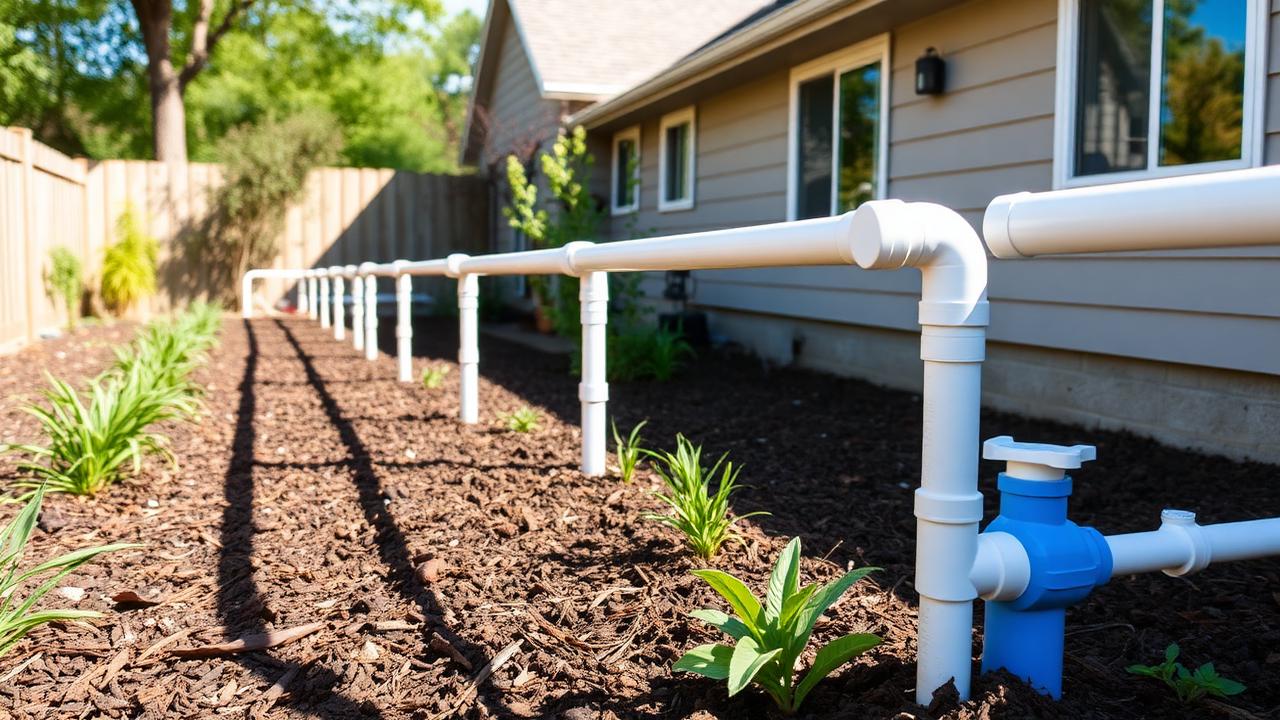
The simplest, cheapest, and most-permitted-friendly option. You divert the washing machine's drain hose through a 3-way valve into a 1" HDPE distribution line that branches out to mulched garden basins.
- Cost: $150–$400 DIY, $600–$1,500 installed
- Permits: Most states explicitly do not require a permit for L2L systems serving a single residence
- Output: 15–25 gallons per laundry load
- Best for: 6–10 fruit trees, perennial beds, ornamental shrubs
2. Branched-Drain Gravity System
Captures shower and bathroom sink water and gravity-feeds it through buried 2" pipe to mulched basins. No pumps, no filters — just slope.
- Cost: $1,200–$3,500 installed
- Permits: Usually required
- Output: 30–60 gallons/day per shower
- Best for: Homes on sloped lots where gravity does the work
3. Pumped & Filtered System
Greywater is collected in a small tank, filtered, and pumped to drip irrigation. Necessary for flat lots or for serving large landscapes. More like a small water-treatment system.
- Cost: $3,500–$8,000+ installed
- Permits: Always required
- Maintenance: Filter cleaning monthly; pump replacement every 8–10 years
- Best for: Flat lots, larger properties, or homes targeting 50%+ outdoor water reduction
What You Can (and Cannot) Irrigate
Yes: fruit trees (oranges, lemons, apples, peaches), berry bushes, ornamentals, lawns (with sub-mulch distribution), perennial beds.
No: root vegetables (carrots, potatoes), leafy greens you eat raw (lettuce, spinach), anything where edible parts touch the soil.
The rule: water can touch the soil but not the edible part of the plant. Use drip irrigation or sub-mulch distribution, never sprinklers.
Soaps and Detergents Matter
Greywater's biggest landscape risk is salt and boron from detergents. Switch the laundry detergent and bath products that drain into your greywater to greywater-safe products:
- Avoid: products containing sodium, boron/borax, chlorine bleach, or "softening" agents
- Look for: Oasis Laundry, ECOS, Bio-Pac — explicitly greywater-safe brands
- Bar soap, liquid Castile, baking soda — all fine
Real Water Savings
An average household producing 40,000 gallons/year of reusable greywater redirected to landscape:
- Outdoor water reduction: 30–60%
- Annual water savings: 15,000–30,000 gallons
- Annual cost savings: $100–$400 depending on your water/sewer rates
- Sewer fee savings (often the bigger win): systems that meter sewer based on water in often credit you for greywater diverted out
Payback period: 3–8 years on L2L systems, 8–15 years on pumped systems. For broader water-saving ideas, see our eco-friendly plumbing upgrades guide.
Critical Design Rules (Don't Skip)
- Use greywater within 24 hours. Stored greywater turns to blackwater fast. No storage tanks unless you've added treatment.
- Never connect greywater to potable water lines. Cross-connection is a code violation and a health hazard. Always include a backflow preventer if your design touches potable plumbing.
- Always run greywater below 2" of mulch. Surface pooling breeds mosquitoes and exposes pathogens.
- Include a 3-way diverter valve. So you can switch back to sewer when needed (very sick household member, heavy bleach use, etc.).
- Maintain freeze protection. Drain or insulate lines in cold climates.
If You're Also Considering a Water Softener
Salt-based ion-exchange softeners and greywater systems don't play well together — the sodium load damages plants over time. If you're installing a softener, choose a salt-free TAC system or bypass the softener on the lines that feed your greywater source. See our water softener guide for the comparison.
Internal Links
- Broader green upgrades: Eco-Friendly Plumbing Upgrades That Pay Back.
- Pairing with a softener? Read Hard Water vs. Soft Water.
- Water-source quality concerns: PFAS in Tap Water — 2026 Homeowner's Guide.
- Browse more in the Eco-Friendly Plumbing category.
External Sources
- EPA WaterSense — Outdoor Water Use in the U.S.
- Greywater Action — code maps & system designs by state
Key Takeaways
- Laundry-to-landscape is the easiest starting point — $150–$400 DIY, usually permit-exempt.
- 36 U.S. states explicitly allow residential greywater; always confirm local code.
- Use greywater within 24 hours and always under 2" of mulch.
- Switch detergents — avoid sodium, boron, and bleach.
- Savings: 15,000–30,000 gallons and $100–$400/year for most households.
Start with one washing machine. A laundry-to-landscape system is the most forgiving on-ramp to whole-home water reuse — and the savings show up the first month.
Frequently Asked Questions
- Is a greywater system legal in my state?
- Probably — as of 2026, 36 U.S. states explicitly allow residential greywater systems. Arizona, California, Texas, New Mexico, Oregon, Washington, and Colorado have the most established homeowner rules. Always check your state plumbing code and local building department before installing.
- How much water can a greywater system actually save?
- A laundry-to-landscape system reuses 15–25 gallons per laundry load — about 6,000 gallons a year. A full shower-and-laundry system can divert 15,000–30,000 gallons annually, cutting outdoor irrigation needs by 30–60% for most households.
- Can I store greywater for later use?
- No — greywater must be used within 24 hours or it becomes anaerobic, smelly, and a health risk. Distribute it directly to landscape under mulch. If you need storage, you're building a treated water reclamation system, which requires filtration, disinfection, and permits.
- Will greywater hurt my plants?
- Only if your detergents contain sodium, boron (borax), or bleach. Switch the laundry detergent and bath products feeding your greywater system to brands marked greywater-safe (Oasis, ECOS, Bio-Pac). Avoid root vegetables and raw-eaten leafy greens; everything else thrives on greywater.
Found this helpful?
Share it with a homeowner who needs it, or explore more guides in Eco-Friendly Plumbing.
Related reading
10 Eco-Friendly Plumbing Upgrades That Actually Pay Back
From $15 aerators to $5,000 greywater systems — the eco-plumbing upgrades that actually pay for themselves, ranked by ROI.
PFAS in Your Tap Water: The 2026 Homeowner's Guide to Testing, Filtering, and Compliance
The EPA's PFAS drinking water rule is now enforceable. Here's exactly how to test, what filters actually remove forever chemicals, and how to read your utility's annual report.