
Garbage Disposal Not Working? 7 Fixes to Try Before Calling a Plumber
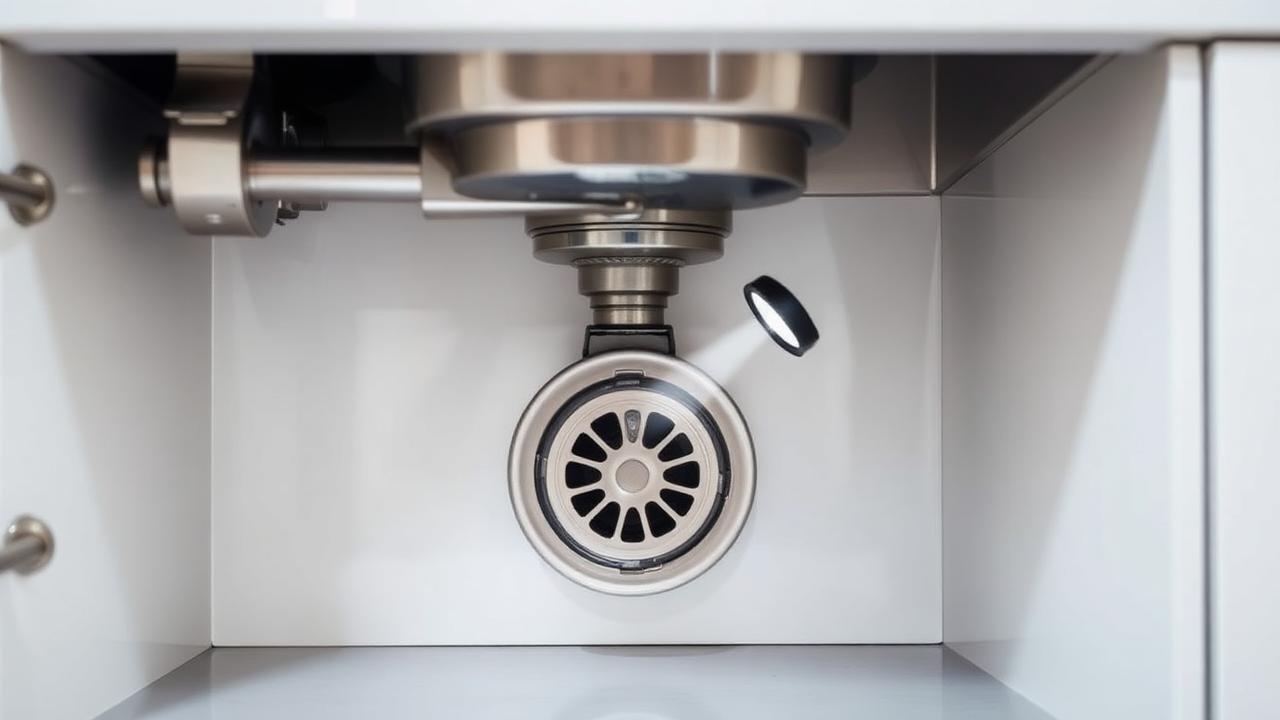
Nine out of ten "broken" garbage disposals aren't actually broken — they're jammed, tripped, or wired to a dead switch. Before you spend $200 on a service call or $300 on a replacement unit, run through these seven fixes in order. Most homeowners solve it inside fix #2.
Before You Start: Safety First
Never put your hand inside a garbage disposal. The grinding chamber can spin even if the unit seems dead — a tripped breaker can reset on its own when you least expect it. For every fix below, you'll work from under the sink or with the power physically off at the wall switch and breaker.
Fix #1: The Disposal Is Completely Dead (No Sound at All)
If you flip the wall switch and hear nothing — not even a hum — the problem is electrical, not mechanical.
- Press the red reset button on the bottom of the disposal. It's a small button (size of a pencil eraser) on the underside of the unit. Push it firmly; you should feel a small click. This trips when the motor overheats.
- Flip the breaker. Find the breaker labeled "disposal" or "kitchen" in your panel. Flip it fully OFF, wait 30 seconds, flip back ON.
- Test the wall switch. Plug a lamp into the disposal outlet (if it's a plug-in unit) to confirm the switch is sending power.
If all three fail, you likely have a bad switch ($20 part, 30-minute job) or a burned-out motor (replace the unit).
Fix #2: It Hums But Doesn't Spin (Jammed)
This is the most common failure — something is wedged between the flywheel and the grinding ring. The motor hums under load but can't turn. Don't let it hum for more than a few seconds — you'll burn out the motor and turn a 5-minute fix into a replacement.
- Turn off the wall switch AND the breaker. Both.
- Insert a 1/4" Allen wrench into the hex socket on the bottom-center of the disposal. (Many disposals ship with this wrench taped to the unit — check the cabinet.)
- Rotate the wrench back and forth — clockwise then counter-clockwise — until you feel the flywheel break free and spin a full revolution in both directions.
- Reach in with a flashlight and long needle-nose pliers — power still off — and remove any visible object (bone, fruit pit, twist tie, popcorn kernel, etc.).
- Press the red reset button, restore power at the breaker, run cold water, and flip the switch. It should spin freely.
Fix #3: It Spins But Drains Slowly
If the unit grinds normally but water backs up into the sink, the clog is downstream — in the disposal's drain line or the P-trap, not in the unit itself.
- Unplug the disposal or kill the breaker.
- Place a bucket under the P-trap and remove the trap. Clean out the gunk.
- Check the horizontal drain arm going into the wall — clear with a hand auger if needed.
This is the same procedure covered in detail in our kitchen sink clog guide.
Fix #4: It's Leaking
Three places leak. Identify which:
- Top (sink flange). Old plumber's putty failed. Loosen the mounting ring, push the flange up, re-pack with fresh putty, retighten. 30-minute job.
- Side (dishwasher hose or drain pipe). Replace the slip-nut gasket or the dishwasher inlet hose clamp. $5 in parts.
- Bottom of the unit. The internal seals have failed. The disposal is dead — replace the whole unit. Repair isn't economical.
Fix #5: It's Loud (Rattling or Grinding Metal)
Something hard is stuck — silverware, a bottle cap, a small bone. Same Allen-wrench-and-pliers procedure as Fix #2.
Fix #6: It Smells
The grinding chamber traps food residue under the rubber baffle (the black gasket at the sink opening). Lift the baffle and scrub the underside with a stiff brush. Then run a tray of ice cubes and a halved lemon through the disposal weekly — it scours the chamber walls.
Fix #7: It Trips the Breaker Every Time
A motor short. The unit is done — replace it. A mid-range 3/4 HP disposal runs $150–$250, plus 1–2 hours installation if you DIY (mostly hand-tightening slip nuts and one wire connection).
What You Should Never Put in a Disposal
- Grease and oil. Solidifies in the drain — a leading cause of clogs.
- Fibrous waste. Celery, corn husks, onion skins, banana peels — they wrap around the flywheel.
- Starchy waste. Pasta, rice, potato peels — they swell and gum up the drain.
- Bones and fruit pits. Cherry pits, peach pits, chicken bones — too hard.
- Coffee grounds. Sludge in the trap.
- Eggshells. Old myth says they sharpen blades. Disposals don't have blades — they have a blunt flywheel. Eggshells just clog the trap.
Internal Links
- Sink draining slowly even after the disposal works? Read Kitchen Sink Clog Fixes That Actually Work.
- Whole-house pressure issues affecting your disposal? See Low Water Pressure: Causes and Fixes.
- Browse more in the Kitchen plumbing category.
Key Takeaways
- No sound at all → reset button + breaker.
- Humming → jam; clear with Allen wrench, never your hand.
- Slow drain → P-trap or branch line, not the disposal itself.
- Leaking from the bottom → replace the unit; everything else is fixable.
- Run cold water during operation and avoid grease, fiber, starch, and bones.
Run through these in order before you call. If you still need pro help, get two quotes before authorizing the work.
Frequently Asked Questions
- Where is the reset button on a garbage disposal?
- On the bottom-center of the unit, facing down. It's a small red (sometimes black) button about the size of a pencil eraser. Press firmly until you feel a click. If it pops back out immediately, the motor is still overheated — wait 10–15 minutes and try again.
- Why does my garbage disposal hum but not spin?
- Something is jammed between the flywheel and the grinding ring. Kill the power, insert a 1/4-inch Allen wrench into the hex socket on the bottom of the unit, and rotate back and forth until it spins freely. Remove the obstruction with long pliers — never your hand.
- Is it worth repairing a garbage disposal or should I replace it?
- Repair if the issue is electrical (reset, breaker, switch), mechanical jam, or a top/side leak. Replace if the unit leaks from the bottom of the housing, trips the breaker repeatedly, or is more than 10 years old and needs a major fix. New units run $150–$300.
- How long does a garbage disposal last?
- 8–15 years for a mid-range unit, depending on use and what you put through it. Avoiding grease, fiber, and bones — and running cold water for 30 seconds after each use — significantly extends life.
Found this helpful?
Share it with a homeowner who needs it, or explore more guides in Kitchen.
Related reading
Kitchen Sink Clog Fixes That Actually Work (And the One Myth to Stop Believing)
The baking soda + vinegar trick is mostly placebo. Here are the kitchen sink clog fixes that actually work.